

Glow Pro Mix 60mg ZPHC Overview
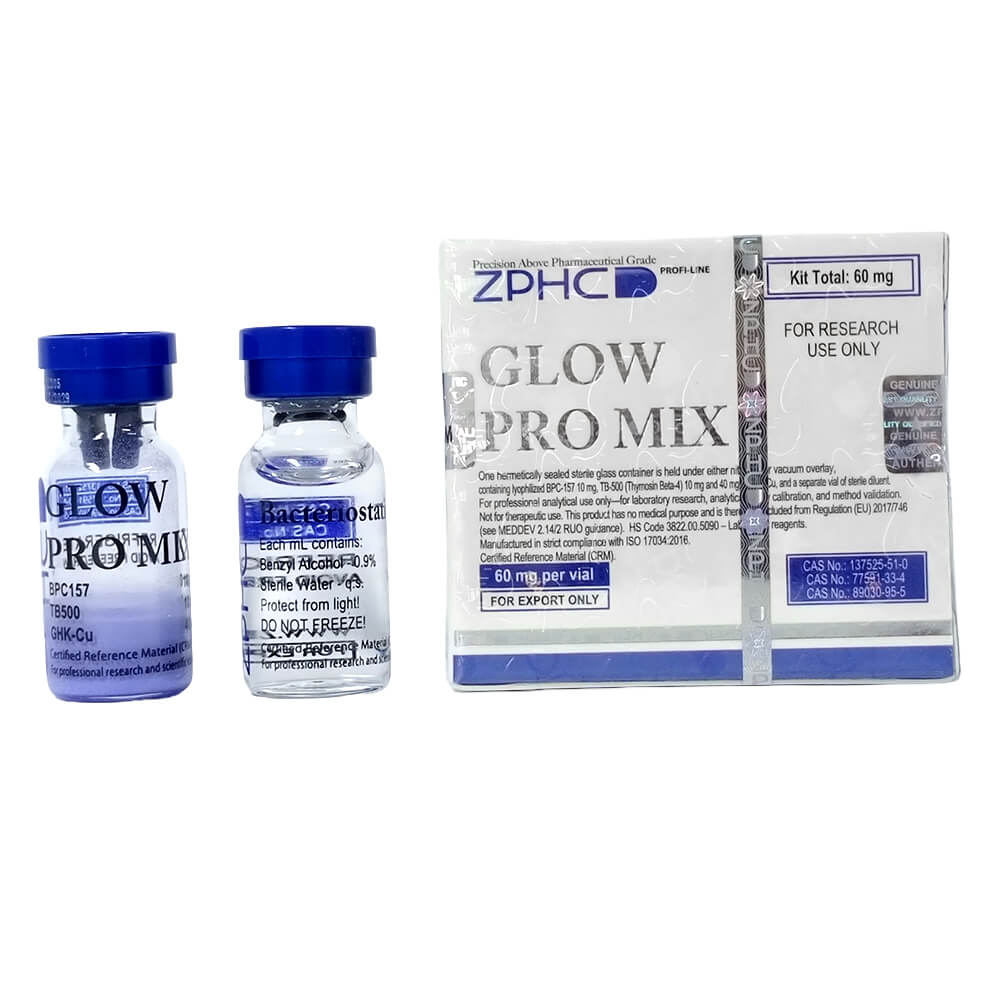
Glow Pro Mix 60mg ZPHC is a multi-component peptide formulation containing BPC-157, TB-500, and GHK-Cu. Products combining these compounds are commonly discussed in the broader research-peptide marketplace because each ingredient has attracted scientific interest in areas involving cellular processes, tissue biology, and repair mechanisms.
For consumers researching peptide formulations, understanding the individual compounds is essential. A combination product should not automatically be interpreted as having proven clinical benefits simply because its ingredients have appeared in scientific research. The evidence, formulation, quality standards, dosing considerations, and regulatory status of individual research compounds can differ substantially.
This page provides an informational overview of the Glow Pro Mix 60mg composition and the terminology associated with ZPHC, while avoiding unsupported claims about medical effectiveness.
What Is Glow Pro Mix 60mg?
Glow Pro Mix 60mg is identified by its listed combination of three peptide-related compounds:
- BPC-157
- TB-500
- GHK-Cu
The “60mg” designation refers to the stated total amount associated with the formulation rather than establishing a clinically validated dose. The precise amount of each component should always be verified against the manufacturer’s current product documentation and labeling.
Because combination formulations can differ between manufacturers, researchers should review the actual certificate of analysis, batch information, ingredient quantities, storage requirements, and other available documentation rather than relying solely on product names.
BPC-157
BPC-157 is a synthetic peptide that has been investigated primarily in preclinical research. Scientific interest surrounding BPC-157 includes experimental work involving tissue biology, gastrointestinal processes, vascular responses, and mechanisms associated with healing.
However, preclinical findings should not be interpreted as evidence that BPC-157 is an established treatment for human medical conditions. Animal and laboratory research can provide useful hypotheses while still leaving important questions regarding human safety, effectiveness, pharmacology, and appropriate administration unanswered.
Anyone researching BPC-157 should therefore distinguish between experimental findings and clinically established evidence.
TB-500
TB-500 is another peptide-related compound frequently encountered in research-oriented product catalogs. It is associated with research surrounding thymosin-related biological mechanisms and cellular processes.
Descriptions of TB-500 sometimes make broad claims about recovery or tissue repair. Such claims should be evaluated carefully because evidence from laboratory or animal models does not necessarily demonstrate equivalent effects in humans.
Researchers should also verify the identity and composition of any material described as TB-500 because terminology used commercially may not always correspond to a single standardized pharmaceutical formulation.
GHK-Cu
GHK-Cu refers to a copper-binding peptide known as copper tripeptide-1. It has been studied in connection with skin biology, extracellular-matrix processes, and other cellular mechanisms.
GHK-Cu has particular interest in cosmetic and laboratory research because of its relationship with biological pathways involving collagen and tissue processes. Nevertheless, research interest should not be confused with proof that a specific commercial formulation provides a particular cosmetic or therapeutic result.
The concentration, purity, formulation, route of administration, and intended application can all affect how research findings should be interpreted.
Why Combine BPC-157, TB-500 and GHK-Cu?
A formulation containing several peptide-related compounds is designed around the concept of combining ingredients with different areas of scientific interest.
BPC-157, TB-500, and GHK-Cu have been investigated independently in different experimental contexts. A combination product may therefore attract attention from researchers interested in studying multiple biological pathways within a single formulation.
Importantly, however, the presence of multiple ingredients does not establish that they work synergistically. Combination claims require appropriate evidence, and results involving one compound cannot automatically be transferred to a three-component product.
This distinction is especially important when evaluating marketing language surrounding peptide products.
Product Composition and Quality Considerations
When researching a product such as Glow Pro Mix 60mg ZPHC, product documentation is an important consideration. Relevant information may include:
- Ingredient identity
- Declared quantity of each component
- Total formulation quantity
- Batch or lot number
- Certificate of analysis
- Testing methodology
- Purity information
- Manufacturing information
- Storage instructions
- Expiration or retest information
Independent laboratory testing can provide additional information about identity and purity, although the usefulness of any test depends on the laboratory, analytical method, sample handling, and scope of the analysis.
A product name alone is not sufficient evidence of composition or quality.
Research Peptides vs. Approved Medicines
One of the most important distinctions when researching ZPHC products is the difference between research materials and approved medicines.
A compound being discussed in scientific literature does not automatically mean that it has been approved as a medication. Likewise, the availability of a product online does not establish that it has been evaluated by regulators for safety, effectiveness, manufacturing consistency, or a specific medical indication.
Consumers should consult authoritative regulatory and medical sources when determining whether a compound is approved for a particular use.
Responsible Evaluation of Peptide Products
Research-oriented peptide products require careful evaluation because online descriptions can contain exaggerated or incomplete claims. A responsible approach is to separate:
Documented facts:
What the manufacturer states about ingredients, quantity, and testing.
Scientific evidence:
What peer-reviewed or otherwise credible research actually demonstrates.
Marketing claims:
Statements suggesting benefits that may not have been established through appropriate clinical research.
This approach can help readers avoid confusing promising laboratory research with established human medical evidence.
Glow Pro Mix 60mg ZPHC: Key Information
Glow Pro Mix 60mg ZPHC is described as a combination formulation containing BPC-157, TB-500, and GHK-Cu. The three components have generated scientific interest in different areas of biological research, but their inclusion in a commercial combination does not by itself establish clinical efficacy or safety.
For anyone evaluating this type of product, the most valuable information is transparent documentation about composition, testing, manufacturing, and intended research use.
Rather than relying on aggressive promises, a powerful research-oriented product description should clearly distinguish established information from hypotheses and unverified claims.
Frequently Asked Questions
What is Glow Pro Mix 60mg ZPHC?
Glow Pro Mix 60mg ZPHC is identified as a combination peptide formulation containing BPC-157, TB-500, and GHK-Cu.
What does the 60mg specification mean?
The 60mg designation describes the stated quantity associated with the product formulation. It should not automatically be interpreted as a recommended dose or clinically validated amount.
What is BPC-157?
BPC-157 is an experimental synthetic peptide that has primarily been studied in preclinical research.
What is TB-500?
TB-500 is a peptide-related compound encountered in research contexts and associated with research into thymosin-related biological processes.
What is GHK-Cu?
GHK-Cu is a copper-binding peptide that has been studied in areas including skin biology and extracellular-matrix processes.
Is Glow Pro Mix 60mg an approved medicine?
Product availability does not establish regulatory approval. Readers should consult the relevant regulatory authority and current product documentation for the status of a particular formulation.
Where can I verify product information?
The most useful documentation includes current labeling, batch information, certificates of analysis, and independent testing where available. Regulatory and peer-reviewed scientific sources can also help distinguish established evidence from promotional claims.
Final Considerations
Glow Pro Mix 60mg ZPHC combines three compounds that have attracted attention in peptide and biological research: BPC-157, TB-500, and GHK-Cu. Understanding the individual ingredients, their research history, and the limitations of available evidence is important when evaluating any combination formulation.
Readers should independently verify product composition and regulatory status and should not interpret experimental peptide information as medical advice or evidence of a proven treatment. For questions involving personal medical use, risks, interactions, or administration, consultation with a qualified healthcare professional is appropriate.
Be the first to review “Glow Pro Mix 60mg ZPHC – (BPC-157 + TB-500 + GHK-Cu)”
Related products
Injectable steroids
Injectable steroids
Testosterone Propionate ZPHC — 100 mg/ml (10 ampoules × 2 ml)
Injectable steroids
Injectable steroids
Anti-Aging
Injectable steroids
Injectable steroids
Reviews
There are no reviews yet.