

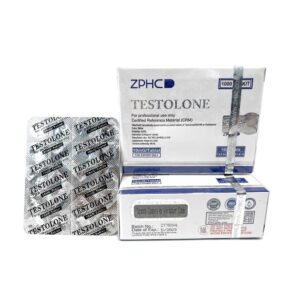
Testolone (RAD-140) ZPHC — 10 mg Tablets: Research Information
Testolone (RAD-140), commonly known as RAD-140, is a selective androgen receptor modulator (SARM) that has attracted attention in research involving androgen-receptor activity. This product is described as 10 mg tablets, 100 tablets per package, but product labeling and composition should always be independently verified before relying on any stated specifications.
For people researching RAD-140 in the USA, understanding what Testolone is, how SARMs differ from approved anabolic-androgenic steroids, and what is known about potential risks is more important than relying on promotional claims. RAD-140 is not an FDA-approved medication for general human use, and safety and efficacy should not be assumed from online product descriptions.
What Is Testolone (RAD-140)?
Testolone, or RAD-140, is a synthetic compound developed to interact selectively with androgen receptors. It belongs to the class of compounds known as selective androgen receptor modulators (SARMs).
SARMs have been investigated because researchers hoped selective androgen-receptor activity might produce certain androgen-related effects while limiting some effects associated with traditional anabolic steroids. However, selectivity does not mean that a compound is risk-free.
RAD-140 remains an investigational compound rather than an FDA-approved treatment for bodybuilding, muscle growth, athletic performance, testosterone replacement, or other general consumer uses.
RAD-140 10 mg Tablet Information
The listed product specifications are:
- Compound: Testolone (RAD-140)
- Common name: RAD-140
- Category: Selective androgen receptor modulator (SARM)
- Stated strength: 10 mg per tablet
- Stated quantity: 100 tablets
- Total labeled amount: 1,000 mg
- Intended context: Research and informational evaluation
The numerical specifications above describe the stated product format and should not be interpreted as a recommendation for human dosing or administration.
Why Is RAD-140 Discussed in Research?
Androgen receptors are involved in numerous physiological processes. Scientists studying androgen signaling investigate how compounds interact with these receptors and how receptor activation can influence biological pathways.
RAD-140 became particularly well known online because of interest in compounds that could influence androgen signaling without being traditional anabolic steroids. This popularity, however, should not be confused with established medical approval or proven long-term safety.
Research interest is not equivalent to clinical approval. A compound can be scientifically interesting while still having substantial unanswered questions regarding appropriate use, adverse effects, interactions, and long-term outcomes.
Potential Risks and Safety Considerations
One of the most important issues surrounding RAD-140 is the limited amount of long-term human safety information available.
SARMs have been associated with safety concerns, and regulatory authorities have warned consumers about products marketed as SARMs. Potential concerns discussed in the scientific and regulatory literature include changes to hormone-related systems, liver effects, cardiovascular risks, and other adverse reactions.
Online products can introduce additional uncertainty because the actual contents may differ from the label. Contamination, inaccurate concentration, substitution with other substances, or inadequate quality control can create risks that cannot be identified simply from packaging or a product name.
For that reason, a product described online as RAD-140 10 mg should not automatically be assumed to contain exactly 10 mg of Testolone or to have pharmaceutical-grade purity.
RAD-140 and Athletic Drug Testing
Athletes should also be aware that SARMs can create significant anti-doping concerns. Testolone/RAD-140 is prohibited under applicable anti-doping rules, meaning its presence can potentially result in sanctions for athletes subject to drug testing.
Anyone participating in a tested sport should consult the current prohibited-substance list maintained by the relevant governing or anti-doping organization rather than relying on a retailer’s description.
Regulatory Status in the United States
Consumers searching for Testolone RAD-140 in the USA should distinguish between an online product being available for sale and a substance being approved as a medication.
RAD-140 is not an FDA-approved drug for routine human use. Statements suggesting that SARMs are equivalent to approved medications, dietary supplements, or conventional nutritional products can therefore be misleading.
Before considering any investigational compound, consumers should consult qualified medical professionals and review current information from authoritative regulatory and medical sources.
Why Product Verification Matters
Research chemicals and products marketed online can vary considerably in quality. When evaluating information about RAD-140, useful documentation may include:
- Independent analytical testing
- Certificate of analysis documentation
- Batch or lot identification
- Stated ingredient information
- Manufacturing and quality-control information
- Clear regulatory disclaimers
- Appropriate storage information
- Contact information for the responsible organization
A professional-looking label or website alone does not establish purity, identity, potency, or safety.
Frequently Asked Questions About Testolone RAD-140
Is RAD-140 a steroid?
RAD-140 is generally classified as a SARM, not a conventional anabolic-androgenic steroid. Both categories can interact with androgen-related biological pathways, but they are chemically and pharmacologically distinct.
Is Testolone FDA approved?
No. Testolone/RAD-140 is not FDA-approved as a medication for general human use.
What does RAD-140 10 mg mean?
A label stating “10 mg” generally indicates the claimed amount of RAD-140 per tablet. It does not independently establish that laboratory testing confirms the stated concentration.
Are SARMs risk-free because they are selective?
No. “Selective” describes the intended receptor activity of the compound; it does not mean that the compound is free from adverse effects or long-term health concerns.
Can RAD-140 affect drug testing?
Yes. RAD-140 is relevant to anti-doping regulations and can be prohibited for athletes subject to drug testing. Applicable rules should always be checked with the appropriate governing body.
Responsible Research and Evaluation
A compelling product page should not replace evidence-based information. Anyone researching Testolone (RAD-140) 10 mg should evaluate claims carefully and distinguish laboratory research from established clinical evidence.
Particular caution is warranted when websites promise dramatic physique changes, guaranteed performance improvements, effortless results, or complete safety. Such claims can obscure the fact that important questions about SARMs remain unresolved.
The most valuable approach is to examine the compound’s scientific background, regulatory status, available safety information, testing documentation, and applicable legal or sporting requirements before drawing conclusions.
Summary
Testolone (RAD-140) ZPHC — 10 mg, 100 tablets is a product description associated with the investigational compound Testolone, a SARM that has received considerable attention in research and online performance-enhancement communities.
Its stated format is 10 mg per tablet with 100 tablets per package, representing a labeled total of 1,000 mg. These specifications should be independently verified rather than accepted solely from marketing materials.
For audiences researching RAD-140 in the United States, the key considerations are its investigational status, limited long-term human safety data, potential adverse effects, product-quality uncertainty, and relevance to anti-doping rules. Responsible evaluation should prioritize reliable scientific and regulatory information over promotional claims.
Important: This information is educational and does not constitute medical advice, a dosing protocol, or a recommendation to use RAD-140. Testolone should not be represented as an FDA-approved treatment or general-purpose supplement.
Be the first to review “Testolone (RAD-140) ZPHC — 10 mg (100 tablets × 10 mg)”
Related products
Injectable steroids
Injectable steroids
Injectable steroids
Anti-Aging
Injectable steroids
Reviews
There are no reviews yet.