

Andarine (S-4) ZPHC: Research and Product Information
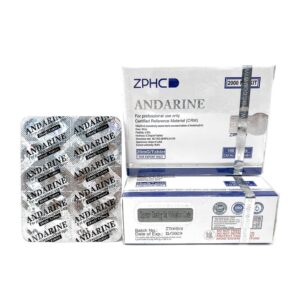
Andarine, commonly identified as S-4, is a selective androgen receptor modulator (SARM) that has attracted attention in bodybuilding, fitness, and research communities because of its interaction with androgen receptors. The product referenced here is labeled as Andarine (S-4) ZPHC — 20 mg, supplied as 100 tablets of 20 mg each.
For consumers researching ZPHC Andarine, it is important to distinguish product marketing claims from established medical evidence. Andarine is not an FDA-approved medication for human use, and SARMs are not legally marketed in the United States as dietary supplements. The FDA has specifically identified Andarine/S-4 among substances associated with SARM regulatory concerns.
What Is Andarine (S-4)?
Andarine is a non-steroidal selective androgen receptor modulator developed as an investigational compound. SARMs were designed to interact with androgen receptors and have been studied for potential effects on tissues such as muscle and bone.
Unlike approved medications, however, Andarine has not gone through the FDA approval process demonstrating that it is safe and effective for consumer use. The U.S. Anti-Doping Agency (USADA) identifies Andarine as a SARM and states that SARMs are not approved for human use by a regulatory body.
This distinction is particularly important when evaluating online listings for Andarine S-4 20 mg or products carrying the ZPHC name. Product descriptions, labels, dosage claims, or “research” terminology should not be interpreted as evidence that a product has been evaluated for human safety.
Andarine S-4 20 mg Product Details
The supplied product designation describes:
- Product: Andarine (S-4)
- Brand/Label: ZPHC
- Strength: 20 mg per tablet
- Quantity: 100 tablets
- Total labeled amount: 2,000 mg
- Category: Selective androgen receptor modulator (SARM)
- Status: Investigational/unapproved for human use
These specifications describe the labeling information associated with the product name and should not be interpreted as confirmation of purity, potency, manufacturing quality, or regulatory approval.
Why Is Andarine Also Called S-4?
The designation S-4 is another commonly used name for Andarine. Searching for information may therefore produce results using several related terms, including:
- Andarine
- Andarine S-4
- S-4 SARM
- S4 Andarine
- Andarine 20 mg
- Andarine tablets
- ZPHC Andarine
- ZPHC S-4
- Selective androgen receptor modulator
Understanding these terms can make research easier while helping users recognize that different names may refer to the same investigational compound.
Important U.S. Regulatory Information
The regulatory status of Andarine is one of the most important factors to consider when researching this product in the United States.
The FDA states that SARMs are not FDA-approved and warns consumers about potentially serious adverse effects associated with SARM products. Reported concerns include liver injury, cardiovascular problems, sexual dysfunction, infertility, and other potentially serious outcomes.
The FDA has also taken enforcement action against businesses marketing S-4/Andarine and other SARMs. In a December 2025 warning letter, for example, the agency identified S-4 Andarine among products being marketed as SARMs and described such products as unapproved drugs.
Consequently, consumers searching for ZPHC Andarine in the USA should carefully distinguish between an online product listing and an FDA-authorized medication.
Safety Considerations for Andarine S-4
One of the most important reasons for taking a cautious approach to Andarine is the lack of established long-term human safety data.
SARMs have been associated with potentially serious adverse effects. The FDA has reported concerns involving liver injury and acute liver failure, cardiovascular risks, sexual dysfunction, infertility, and other serious health problems.
Andarine has also been specifically identified by USADA as a SARM. USADA notes that SARMs have been associated with serious effects including testosterone suppression, liver injury, myocarditis, and other adverse outcomes in reports and studies involving the class.
For that reason, claims portraying S-4 as a simple, risk-free shortcut for improving physique or athletic performance are not supported by the regulatory evidence.
Andarine and Athletic Drug Testing
Competitive athletes should be particularly careful when researching Andarine.
SARMs are prohibited under anti-doping rules. USADA specifically lists Andarine/S-4 among SARMs prohibited under the applicable anabolic-agent category.
The World Anti-Doping Agency’s prohibited list also identifies Andarine among selective androgen receptor modulators prohibited as anabolic agents.
Therefore, athletes subject to drug testing should not assume that a product described as a “research compound” or supplement is permitted under their governing organization’s rules.
Research Context
Scientific interest in SARMs comes from their ability to interact with androgen receptors. Researchers have investigated this class in connection with conditions involving muscle and bone. The theoretical objective behind SARMs has been to produce more selective androgen-receptor activity than traditional anabolic-androgenic steroids.
However, investigational interest does not establish clinical approval.
This distinction is essential for accurate SEO content. Terms such as “muscle building,” “strength enhancement,” “fat loss,” or “performance enhancement” may appear in online marketing, but these promotional claims should not be presented as established medical benefits of Andarine.
A responsible product page should instead explain the compound’s investigational status, identify its regulatory limitations, and encourage readers to evaluate authoritative medical and regulatory information.
What to Consider When Researching ZPHC Andarine
When researching ZPHC Andarine 20 mg, consumers can evaluate several important factors:
1. Regulatory status
Confirm whether the substance is approved for human use. Andarine is not FDA-approved.
2. Product quality
An online label does not independently establish identity, purity, potency, sterility, or manufacturing quality. Products marketed online may differ from their stated specifications.
3. Evidence quality
Separate laboratory or investigational findings from clinical evidence involving approved medications. Experimental findings cannot automatically be translated into safe human use.
4. Potential health risks
FDA warnings concerning SARMs warrant serious consideration, particularly regarding liver and cardiovascular health.
5. Athletic eligibility
Competitive athletes should check their applicable anti-doping rules because Andarine is prohibited under WADA-related anti-doping standards.
Andarine (S-4) ZPHC: A Cautious Research Perspective
Interest in Andarine S-4 20 mg continues to appear across bodybuilding and research-oriented online communities, but popularity should not be confused with medical approval or established safety.
The most accurate way to understand this compound is as an investigational SARM rather than an approved dietary supplement or prescription treatment. The FDA continues to warn consumers about SARMs, while USADA identifies Andarine as a prohibited SARM for athletes.
That makes careful research especially important. A strong product-information page should prioritize transparent terminology, regulatory accuracy, and safety awareness instead of unsupported promises.
Final Overview
Andarine (S-4) ZPHC — 20 mg (100 tablets × 20 mg) refers to a product labeled as containing the investigational SARM Andarine. Although Andarine has generated considerable interest because of its interaction with androgen receptors, it is not an FDA-approved drug or dietary supplement ingredient for human use in the United States.
The FDA has warned about SARMs and their potential for serious adverse effects, while anti-doping authorities identify Andarine as a prohibited substance.
For anyone researching ZPHC Andarine, the most important takeaway is that product marketing should be evaluated separately from established medical evidence. Readers should consult a qualified healthcare professional before considering any unapproved compound and should verify applicable anti-doping regulations if they participate in competitive sport.
Positive takeaway: informed research and careful evaluation can help consumers avoid misleading claims and make safer, evidence-based decisions about substances marketed online.
Be the first to review “Andarine (S-4) ZPHC — 20 mg (100 tablets × 20 mg)”
Related products
Injectable steroids
Injectable steroids
Injectable steroids
Reviews
There are no reviews yet.