

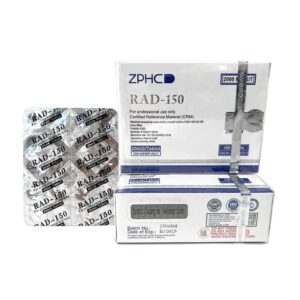
RAD-150 (TLB-150) ZPHC — 20 mg Tablets
RAD-150 (TLB-150) Overview
RAD-150, also known as TLB-150, is a compound associated with the selective androgen receptor modulator (SARM) research category. The product referenced here is labeled as RAD-150 (TLB-150) ZPHC — 20 mg, with a package containing 100 tablets at 20 mg each.
Interest in compounds in the SARM category has grown among researchers and fitness communities because of their reported interaction with androgen receptors. However, RAD-150 is not an FDA-approved medication for treating medical conditions, and research chemicals should not be presented as established alternatives to approved therapies.
For individuals researching ZPHC products, RAD-150/TLB-150 is a product name that may appear in catalogs focused on research-oriented compounds. Understanding the compound, its research status, labeling, and potential risks is important before drawing conclusions about its properties or applications.
What Is RAD-150 (TLB-150)?
RAD-150 is commonly described online as a next-generation SARM-related compound. SARMs are compounds designed to interact selectively with androgen receptors. Researchers have investigated androgen-receptor signaling because these receptors influence numerous physiological processes.
The term “selective” refers to the intended mechanism of targeting androgen receptors in particular tissues rather than producing the broad hormonal effects associated with traditional anabolic-androgenic steroids. That distinction does not mean SARMs are risk-free.
RAD-150 should therefore be approached as a research compound rather than a proven nutritional supplement or approved pharmaceutical product. Information found online can vary substantially in quality, and anecdotal reports should not be treated as clinical evidence.
ZPHC RAD-150 Product Information
The referenced product is identified as:
- Product: RAD-150 (TLB-150)
- Brand/Label: ZPHC
- Strength: 20 mg per tablet
- Quantity: 100 tablets
- Labeled total amount: 2,000 mg
- Category: Research compound / SARM-related compound
These details describe the labeling information provided for the product and should not be interpreted as confirmation of purity, potency, safety, or clinical effectiveness.
Independent laboratory testing, manufacturing standards, storage conditions, and authenticity can substantially affect the characteristics of any research chemical. Consumers and researchers should carefully distinguish manufacturer claims from independently verified evidence.
Research Interest in Androgen Receptor Modulators
Androgen receptors are cellular receptors that respond to androgenic hormones and participate in signaling pathways throughout the body. Because these receptors influence muscle, bone, reproductive tissues, and other physiological systems, androgen-receptor modulation has attracted significant scientific interest.
SARM-related compounds have been investigated for their potential ability to produce tissue-selective androgen-receptor activity. Nevertheless, the existence of a proposed mechanism does not establish that a particular compound is safe or effective for human use.
RAD-150/TLB-150 has considerably less established clinical evidence than approved medications. Consequently, claims regarding specific outcomes should be evaluated carefully and supported by reliable scientific documentation.
Important Safety Considerations
One major concern with unapproved SARM-related compounds is the limited amount of high-quality human safety data. Products marketed as research chemicals may not have undergone the same rigorous evaluation required for FDA-approved medicines.
Potential concerns associated with SARMs and related androgen-receptor-modulating compounds can include hormonal changes, alterations in lipid profiles, liver-related concerns, and other adverse effects. The actual risk associated with an individual compound can vary, and the absence of extensive clinical research makes definitive safety conclusions difficult.
Another important issue is product quality. A label stating a particular strength does not, by itself, establish that every tablet contains the stated amount or that the product is free from contaminants.
For these reasons, the information on this page should be considered educational rather than medical advice.
RAD-150 and the U.S. Market
For people searching the United States market for ZPHC RAD-150, it is important to understand the distinction between a product being listed online and a product being approved for human use.
The regulatory status of research chemicals can differ from that of prescription medications and dietary supplements. Buyers should consult current information from authoritative U.S. regulatory and medical sources before considering any compound for personal use.
A product’s presence on a website should not be interpreted as FDA approval, proof of effectiveness, or confirmation that it is appropriate for human consumption.
How to Evaluate Research Compound Information
When researching RAD-150 or other SARM-related compounds, consider several factors:
1. Verify the Identity
Check the exact compound name, stated concentration, batch information, and manufacturer or distributor documentation.
2. Look for Independent Testing
Third-party analytical testing can provide useful information about identity, purity, and concentration. Testing documentation should correspond to the specific batch whenever possible.
3. Separate Research From Marketing
Claims involving dramatic muscle growth, fat loss, strength improvements, or other outcomes should be treated cautiously when robust clinical evidence is unavailable.
4. Review Regulatory Information
U.S. consumers should consult authoritative sources such as the FDA for current information regarding unapproved drugs, SARMs, and related products.
5. Consider Potential Risks
Limited human research means that unknown or insufficiently characterized risks may exist. More information is not necessarily evidence of greater safety.
Why Responsible Research Matters
The growing popularity of SARMs and related compounds has created substantial interest in products such as RAD-150/TLB-150. At the same time, online descriptions can sometimes blur the distinction between experimental compounds and established medical treatments.
Responsible research requires examining available scientific evidence, understanding limitations, checking regulatory information, and avoiding unsupported promises. This approach provides a more accurate foundation for understanding ZPHC-labeled research products and the broader SARM category.
RAD-150 (TLB-150) Search Terms
People researching this compound may encounter related terms including RAD-150, TLB-150, RAD-150 20 mg, RAD-150 100 tablets, ZPHC RAD-150, ZPHC TLB-150, SARM research compounds, and androgen receptor modulators.
Search terminology does not establish a product’s safety, effectiveness, legality, or regulatory approval. Each claim should be evaluated against reliable and current evidence.
Final Considerations
RAD-150 (TLB-150) ZPHC is labeled as a 20 mg tablet product containing 100 tablets. It belongs to a category of compounds associated with research into selective androgen-receptor modulation.
Its research status is an important consideration. RAD-150 should not be represented as an FDA-approved treatment, established supplement, or clinically proven performance-enhancing product. The limited evidence surrounding newer SARM-related compounds makes careful evaluation especially important.
For anyone researching ZPHC RAD-150, the most valuable approach is to focus on verifiable product information, independent testing, regulatory status, scientific literature, and documented safety data rather than relying on promotional claims or anecdotal experiences.
Be the first to review “RAD-150 (TLB-150) ZPHC — 20 mg (100 tablets × 20 mg)”
Related products
Injectable steroids
Injectable steroids
Methandienone Injectable ZPHC — 25 mg/ml (10 ampoules × 2 ml)
Injectable steroids
Injectable steroids
Injectable steroids
Reviews
There are no reviews yet.