

Cardarine (GW-501516) Overview
Cardarine, also known as GW-501516, is an investigational compound that has attracted considerable attention in exercise, metabolism, and laboratory research. The compound is commonly discussed in connection with endurance, energy metabolism, and lipid-related pathways because of its activity on PPARδ (peroxisome proliferator-activated receptor delta).
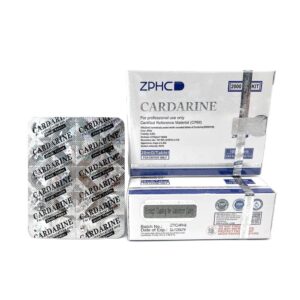
The product referenced here is identified as Cardarine (GW-501516) ZPHC — 20 mg, described as a package containing 100 tablets of 20 mg each. Product labeling and presentation should not be interpreted as evidence of regulatory approval, clinical effectiveness, or safety for human use.
For researchers and readers investigating GW-501516, understanding its experimental status is particularly important. Cardarine is not an approved human medicine, and it should not be represented as an established treatment, dietary supplement, or proven performance-enhancing product.
What Is GW-501516?
GW-501516 is a synthetic compound developed for research involving metabolic and cardiovascular pathways. It is often referred to by the names Cardarine, GW501516, and GW-501516.
Unlike anabolic steroids, GW-501516 is generally described as a PPARδ agonist. This distinction is important because its proposed biological activity involves receptor signaling associated with fatty-acid metabolism and energy utilization rather than direct androgen-receptor activity.
Preclinical research has investigated how activating PPARδ may influence metabolic processes. These findings have generated interest in GW-501516 among researchers studying exercise physiology and metabolism, but experimental findings should not be confused with demonstrated clinical benefits in humans.
Cardarine and Metabolic Research
One reason GW-501516 became widely discussed is its relationship with PPARδ signaling. PPARδ is involved in regulating genes associated with lipid metabolism and energy homeostasis.
Experimental studies have examined whether activation of this pathway can influence:
- Fatty-acid utilization
- Energy metabolism
- Lipid handling
- Skeletal-muscle metabolic activity
- Exercise-related metabolic adaptations
- Cardiovascular and metabolic research pathways
These areas remain subjects of scientific investigation. Results from laboratory or animal models cannot automatically establish that the same effects occur safely or effectively in humans.
Cardarine and Exercise Research
GW-501516 has also received attention because preclinical research explored relationships between PPARδ activation and endurance-related adaptations.
This has contributed to Cardarine becoming a frequently searched compound among people interested in sports and performance research. However, popularity should not be interpreted as evidence of safety or effectiveness.
There is an important distinction between research observations and clinically validated outcomes. A compound can produce measurable biological effects in an experimental model without being appropriate for human consumption.
Important Safety Information
Safety is one of the most important considerations surrounding Cardarine.
GW-501516 was investigated during drug-development research, but development did not result in an approved human therapeutic product. Preclinical studies raised serious concerns regarding carcinogenicity. In particular, long-term animal studies reported the development of cancerous changes across multiple tissues.
Because of these findings, Cardarine should not be described using misleading claims such as “safe,” “proven,” “risk-free,” or “clinically approved.”
The absence of approval is particularly relevant for anyone researching ZPHC Cardarine, GW-501516, or similar products. Product packaging, tablet strength, or laboratory-style labeling does not establish that a compound is safe for human administration.
Why Regulatory Status Matters
Consumers often encounter research compounds through online listings that use pharmaceutical-style terminology. Such presentation can create confusion between an investigational chemical and an approved medication.
For Cardarine, this distinction is especially important. GW-501516 does not have established approval as a medicine for improving endurance, treating obesity, managing cholesterol, or addressing other health conditions.
Consequently, claims that Cardarine provides guaranteed fat loss, enhanced athletic performance, increased endurance, or improved health should be treated cautiously unless supported by appropriate clinical evidence.
ZPHC Cardarine 20 mg Product Identification
The referenced product is presented under the following identification:
Product: Cardarine (GW-501516) ZPHC
Strength: 20 mg per tablet
Quantity: 100 tablets
Total labeled amount: 2,000 mg
Compound: GW-501516 / Cardarine
Category: Investigational compound
These specifications describe the product listing and do not establish purity, potency, authenticity, sterility, or suitability for human use.
Independent analytical verification would be required to establish the actual identity and concentration of material in any particular product.
Research Considerations
Researchers examining GW-501516 should consider several factors before interpreting available information. First, the quality of evidence differs substantially between laboratory studies, animal experiments, and human clinical research.
Second, experimental compounds can have biological effects that are not fully understood. A mechanism that appears promising in an early-stage study does not necessarily translate into a safe therapeutic application.
Third, long-term risks can remain uncertain until extensive safety testing has been completed. With Cardarine, the preclinical cancer findings represent an especially important reason for caution.
Cardarine vs. Approved Treatments
GW-501516 should not be presented as interchangeable with approved medications used for metabolic or cardiovascular conditions.
Approved medicines undergo extensive evaluation involving manufacturing standards, pharmacology, toxicology, clinical efficacy, adverse-event monitoring, and regulatory review. An investigational compound does not necessarily meet those standards.
This difference is essential when evaluating online information about Cardarine GW-501516 20 mg and similar research chemicals.
Frequently Asked Questions
What is Cardarine GW-501516?
Cardarine, or GW-501516, is an investigational compound that activates PPARδ. It has been studied in preclinical research involving metabolism, lipid pathways, and exercise-related physiology.
Is Cardarine FDA approved?
Cardarine is not an FDA-approved human medicine. It should therefore not be marketed as an approved treatment or established therapy.
Is GW-501516 a steroid?
No. GW-501516 is generally characterized as a PPARδ agonist rather than an anabolic steroid.
What does 20 mg mean on a Cardarine product?
A 20 mg designation generally refers to the labeled amount of GW-501516 per tablet. It does not independently verify the contents or establish that the product is safe for human use.
Why is Cardarine controversial?
The compound generated interest because of preclinical research into metabolism and endurance-related pathways. However, animal studies also raised serious carcinogenicity concerns, making safety a major issue surrounding GW-501516.
Can Cardarine be considered a supplement?
Cardarine should not automatically be categorized as a dietary supplement simply because it is sold online or discussed alongside supplements. Its investigational status and lack of approval are important considerations.
Final Considerations
Cardarine (GW-501516) remains an investigational compound rather than an approved human medicine. Although its interaction with PPARδ has made it scientifically interesting, the available safety concerns mean that promotional claims about guaranteed performance, fat loss, endurance, or health benefits are inappropriate.
Anyone researching ZPHC Cardarine 20 mg, GW-501516, or related compounds should prioritize reliable scientific and regulatory information and distinguish experimental findings from established human clinical evidence.
This page is intended for informational and research purposes only and does not constitute medical advice, a recommendation to use GW-501516, or an endorsement of any supplier.
Be the first to review “Cardarine (GW-501516) ZPHC — 20 mg (100 tablets × 20 mg)”
Related products
Injectable steroids
Injectable steroids
Dihydroboldenone Cypionate ZPHC — 50 mg/ml (10 ampoules × 2 ml)
Injectable steroids
Injectable steroids
Methandienone Injectable ZPHC — 25 mg/ml (10 ampoules × 2 ml)
Injectable steroids
Boldenone Undecylenate ZPHC — 300 mg/ml (10 ampoules × 2 ml)
Reviews
There are no reviews yet.