

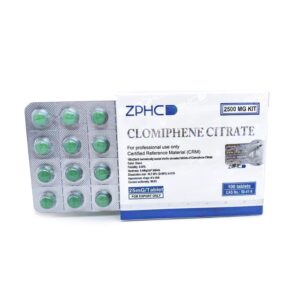


Clomiphene Citrate (Clomid) ZPHC — 25 mg, 100 Tablets
Clomiphene Citrate (Clomid) Overview
Clomiphene citrate, commonly associated with the brand name Clomid, is a prescription medication used primarily for the treatment of ovulatory dysfunction in women who are seeking pregnancy. The medication belongs to a class of compounds that can influence estrogen-related signaling and stimulate the hormonal processes involved in ovulation.
This ZPHC Clomiphene Citrate 25 mg presentation contains 100 tablets. Because clomiphene citrate is a prescription medicine with significant contraindications, warnings, and monitoring considerations, it should only be used under the direction of an appropriately qualified healthcare professional.
For anyone researching ZPHC clomiphene citrate, understanding the medication’s approved use, precautions, and potential risks is more important than simply comparing tablet strength or package size.
What Is Clomiphene Citrate?
Clomiphene citrate is an oral fertility medication indicated for patients with demonstrated ovulatory dysfunction under appropriate clinical circumstances. According to current prescribing information, candidates should be evaluated carefully before treatment, including assessment for pregnancy, ovarian cysts or enlargement, abnormal uterine bleeding, and liver function.
The medication is intended to help induce ovulation in appropriately selected patients. Successful treatment depends on the underlying cause of ovulatory dysfunction, individual patient characteristics, and appropriate medical monitoring.
It is important to distinguish medically established uses from claims sometimes found on bodybuilding, hormone-optimization, or internet forums. Current prescribing information does not establish clomiphene citrate as an approved treatment for male infertility, and it states that adequate well-controlled studies demonstrating effectiveness for that purpose are lacking.
ZPHC Clomiphene Citrate 25 mg Product Details
- Active ingredient: Clomiphene citrate
- Common name: Clomid
- Strength: 25 mg per tablet
- Quantity: 100 tablets
- Dosage form: Oral tablets
- Medication category: Prescription fertility medication
- Primary labeled use: Treatment of ovulatory dysfunction in appropriately selected women seeking pregnancy
The 25 mg strength should not be interpreted as an instruction for how much medication to take. Clomiphene treatment requires individualized medical assessment, and patients should follow the dosage and treatment schedule prescribed by their healthcare professional.
How Clomiphene Citrate Works
Clomiphene citrate affects estrogen-related feedback mechanisms involved in the reproductive hormone system. In appropriately selected patients, this hormonal effect can stimulate the release of gonadotropins involved in follicular development and ovulation.
The objective of treatment is ovulation, which can subsequently provide an opportunity for pregnancy. Current prescribing information emphasizes that appropriately timed intercourse in relation to ovulation is important and that patients require evaluation before and between treatment courses.
Because fertility problems can have many different causes, clomiphene citrate is not appropriate for every patient. Conditions involving the thyroid, adrenal glands, prolactin levels, ovarian function, reproductive anatomy, or male-factor infertility may require different evaluation or treatment.
Potential Benefits and Clinical Considerations
When prescribed for the appropriate patient, clomiphene citrate can provide a well-established medical option for managing certain forms of ovulatory dysfunction.
Potential clinical objectives include:
- Supporting ovulation in appropriately selected patients
- Addressing certain forms of ovulatory dysfunction
- Providing an oral treatment option under medical supervision
- Supporting fertility treatment when the underlying condition is appropriate for clomiphene therapy
However, treatment outcomes vary considerably between individuals. Clomiphene citrate should not be marketed or interpreted as a guaranteed fertility solution.
Current labeling identifies several groups in whom clomiphene therapy should not be used, including patients who are pregnant, those with certain ovarian cysts or enlargement, unexplained abnormal uterine bleeding, liver disease or a history of liver dysfunction, uncontrolled thyroid or adrenal disorders, and certain intracranial conditions.
Important Safety Information
Clomiphene citrate requires careful consideration because it can cause clinically significant adverse effects.
One particularly important warning involves visual symptoms. Patients may experience blurred vision, spots, flashes, or other visual disturbances during treatment. Current labeling notes that visual problems can increase with greater total dosage or longer treatment duration and that prolonged or potentially irreversible visual disturbances have been reported.
Anyone experiencing unusual visual symptoms while taking clomiphene should promptly contact their healthcare professional. Because visual disturbances can affect driving and operating machinery, patients should take appropriate precautions if symptoms occur.
Ovarian enlargement can also occur during or shortly after treatment. Abdominal or pelvic pain, discomfort, weight gain, or abdominal distention should be discussed promptly with a healthcare professional.
Pregnancy and Contraindications
Clomiphene citrate is contraindicated during pregnancy. Current prescribing information states that the medication provides no benefit during pregnancy and should not be used in pregnant patients.
Other important contraindications include:
- Known hypersensitivity to clomiphene citrate or its ingredients
- Liver disease or a history of liver dysfunction
- Unexplained abnormal uterine bleeding
- Ovarian cysts or ovarian enlargement unrelated to polycystic ovarian syndrome
- Uncontrolled thyroid or adrenal dysfunction
- Certain organic intracranial lesions
These restrictions demonstrate why clomiphene citrate should not be treated as an ordinary over-the-counter supplement. A healthcare professional should determine whether treatment is appropriate before use.
Dosage and Treatment Monitoring
The appropriate clomiphene citrate regimen depends on the patient’s clinical circumstances. Product strength and tablet quantity should not be used to determine a personal dosing schedule.
Current prescribing information describes treatment courses based on the patient’s menstrual cycle and response to therapy. It also states that prolonged cyclic treatment is not recommended beyond approximately six cycles, including three ovulatory cycles.
Patients should undergo appropriate evaluation before subsequent treatment courses. Medical supervision is particularly important because the treatment goal is ovulation and because ovarian enlargement, visual symptoms, and other adverse effects can occur.
For this reason, self-directed dosing, prolonged use, or combining clomiphene with other fertility or hormone-active medications without medical supervision is not appropriate.
Clomiphene Citrate for Male Hormone or Fertility Use
Clomiphene citrate is frequently discussed online in connection with male hormone management and fertility. However, consumers should distinguish internet claims from established prescribing information.
Current labeling states that there are no adequate, well-controlled studies establishing clomiphene citrate’s effectiveness for male infertility. Reports of testicular tumors and gynecomastia have also occurred in males using clomiphene, although the causal relationship is not established.
Consequently, anyone considering clomiphene for an indication outside its labeled use should discuss the potential benefits, risks, alternatives, and available evidence with a qualified healthcare professional.
Why Accurate Product Information Matters
Searching for ZPHC Clomid, ZPHC clomiphene citrate, clomiphene citrate 25 mg, or Clomid 100 tablets can produce a wide range of online information. Some sources may present the medication as a general-purpose hormone product, but prescription medicines require substantially more careful consideration.
An accurate product page should clearly identify the active ingredient, strength, dosage form, intended medical use, contraindications, and important warnings rather than making unsupported promises.
The most important positive consideration is that clomiphene citrate has a recognized clinical role in appropriately selected patients with ovulatory dysfunction. At the same time, its risks and contraindications mean that professional assessment remains essential.
Frequently Asked Questions
What is ZPHC Clomiphene Citrate 25 mg?
It is a listed presentation of clomiphene citrate containing 25 mg per tablet. Clomiphene citrate is a prescription fertility medication used primarily for certain forms of ovulatory dysfunction.
What is Clomid?
Clomid is a commonly recognized brand name associated with clomiphene citrate. The active medication is clomiphene citrate.
Is clomiphene citrate available without a prescription?
Clomiphene citrate is a prescription medication in the United States. Patients should obtain it through appropriate medical and pharmacy channels.
Is 25 mg an appropriate dose for everyone?
No. Tablet strength does not establish an individual’s appropriate regimen. Treatment should be determined by a qualified healthcare professional based on the patient’s condition and response.
Can clomiphene citrate be used during pregnancy?
No. Clomiphene citrate is contraindicated during pregnancy.
What are important warnings associated with clomiphene?
Visual disturbances and ovarian enlargement are among the important warnings. Some visual problems can be prolonged or potentially irreversible, particularly with higher cumulative exposure or longer treatment.
Final Product Information
ZPHC Clomiphene Citrate 25 mg, 100 Tablets can be described accurately as an oral clomiphene citrate product intended for use within appropriate medical care. Its principal established role is the treatment of ovulatory dysfunction in appropriately selected women seeking pregnancy.
Rather than relying on promotional claims, prospective patients should review the official prescribing information and consult a qualified healthcare professional who can determine whether clomiphene citrate is appropriate. This approach provides a safer and more reliable foundation for understanding the medication and its potential role in fertility care.
Important: This information is educational and does not replace professional medical advice, diagnosis, or treatment. Clomiphene citrate should be used only as prescribed by a qualified healthcare professional.
Be the first to review “Clomiphene Citrate (Clomid) ZPHC — 25 mg (100 tablets)”
Related products


Oral Steroids
Anti-Aging


Oral Steroids
Reviews
There are no reviews yet.