

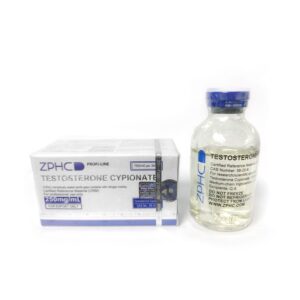
Testosterone Cypionate ZPHC — 250 mg/ml (30 ml)
Testosterone Cypionate is a long-acting testosterone ester used in prescription testosterone therapy for certain men with clinically confirmed testosterone deficiency associated with an underlying medical condition. The product information provided for this listing describes Testosterone Cypionate ZPHC at 250 mg/ml in a 30 ml presentation.
For U.S. readers researching testosterone cypionate, understanding the medication, its intended medical context, formulation, potential risks, and regulatory status is more important than simply comparing product listings. Testosterone therapy should be evaluated and monitored by a qualified healthcare professional.
What Is Testosterone Cypionate?
Testosterone cypionate is an injectable form of testosterone. Testosterone is an androgen hormone involved in the development and maintenance of male reproductive tissues, bone and muscle physiology, red blood cell production, and other biological functions.
FDA information states that testosterone products are approved for men with low testosterone associated with an underlying medical condition. FDA-approved testosterone formulations include injectable products as well as several non-injectable forms.
Because testosterone affects multiple physiological systems, treatment decisions generally require clinical evaluation rather than being based solely on symptoms, fitness goals, or a product’s advertised concentration.
Product Specifications
- Product: Testosterone Cypionate ZPHC
- Reported concentration: 250 mg/ml
- Reported volume: 30 ml
- Active ingredient: Testosterone cypionate
- Form: Injectable testosterone formulation
- Intended context: Prescription testosterone therapy where medically appropriate
The concentration and volume above describe the product listing supplied for this page. They should not be interpreted as a recommended dose or treatment schedule.
Testosterone Cypionate and Testosterone Replacement Therapy
Testosterone replacement therapy, commonly abbreviated as TRT, may be prescribed when laboratory testing and clinical assessment indicate testosterone deficiency caused by an appropriate medical condition.
Treatment is individualized. A healthcare professional may consider laboratory testosterone measurements, symptoms, medical history, age, existing conditions, medications, and other relevant factors before determining whether testosterone treatment is appropriate.
Importantly, testosterone should not be treated as a general-purpose performance enhancer. The FDA states that approved testosterone products are intended for men with low testosterone associated with an underlying medical condition.
Why Medical Supervision Matters
Testosterone therapy can produce meaningful physiological changes, which is precisely why professional monitoring is important. FDA labeling for testosterone cypionate injection warns that treatment can increase red blood cell counts. Elevated red blood cell counts can increase the risk of blood clots, stroke, and heart attack, and healthcare providers may monitor hemoglobin and hematocrit during treatment.
Other considerations may include blood pressure, cardiovascular risk factors, prostate-related concerns, reproductive function, and other hormone-related effects.
FDA announced testosterone-labeling updates in 2025 following review of cardiovascular and blood-pressure data, demonstrating that the safety profile and prescribing information for testosterone products continue to be monitored and updated as evidence develops.
Testosterone Cypionate 250 mg/ml: Understanding the Concentration
A listing of 250 mg/ml describes the amount of testosterone cypionate contained in each milliliter of the formulation. It does not, by itself, establish an appropriate dose for an individual.
This distinction is important because concentration, injection volume, prescribed dose, and treatment frequency are separate concepts. Patients should follow the exact instructions provided by their prescriber and pharmacist rather than attempting to calculate or modify treatment independently.
For anyone researching “testosterone cypionate 250 mg/ml,” the most valuable information includes the product’s active ingredient, concentration, manufacturer information, regulatory status, prescribing requirements, and applicable safety information.
Potential Risks and Side Effects
Testosterone therapy is not risk-free. Prescription labeling identifies clinically important potential adverse effects, including increased red blood cell counts. Other adverse effects can occur depending on the individual, dose, duration of treatment, and medical circumstances.
The DEA also notes that anabolic steroids, including testosterone, are associated with adverse effects when abused. Reported effects can include changes in cholesterol, cardiovascular complications, acne, fluid retention, reduced sperm production, testicular shrinkage, and other hormone-related effects.
This makes unsupervised or non-medical use particularly concerning. A product’s concentration or presentation should never be interpreted as evidence that it is appropriate for bodybuilding, athletic enhancement, or self-directed hormone therapy.
Regulatory Status in the United States
Testosterone is classified as a Schedule III controlled substance under U.S. federal drug scheduling. The DEA specifically lists anabolic steroids and testosterone among Schedule III substances.
FDA-approved testosterone cypionate injection is a prescription medication. The FDA-approved medication guide states that testosterone cypionate injection is a controlled substance and warns that selling or giving prescription testosterone to others is unlawful.
Accordingly, consumers in the United States should obtain testosterone treatment through appropriate licensed medical and pharmacy channels and comply with applicable federal and state requirements.
Who Should Consider Testosterone Cypionate?
Testosterone cypionate may be considered by a healthcare professional for an appropriate patient with confirmed testosterone deficiency associated with an underlying medical condition.
It should not be assumed that symptoms such as fatigue, changes in body composition, reduced exercise performance, or decreased libido automatically indicate testosterone deficiency. These symptoms can have numerous possible causes.
A clinician can determine whether testosterone testing and further evaluation are appropriate.
Storage and Handling
Storage requirements depend on the specific formulation and manufacturer. Anyone receiving prescription testosterone should follow the storage instructions supplied with the medication and ask a pharmacist if the instructions are unclear.
Do not use an injectable medicine if its packaging appears damaged, its labeling is inconsistent, or the product’s authenticity cannot be established through an appropriate pharmaceutical supply chain.
Frequently Asked Questions
What is Testosterone Cypionate?
Testosterone cypionate is an injectable testosterone ester used in prescription testosterone therapy for appropriate patients with testosterone deficiency.
What does 250 mg/ml mean?
It identifies the concentration stated on the product: 250 milligrams of testosterone cypionate per milliliter of formulation. It is not a personalized dosing recommendation.
Is testosterone cypionate prescription-only in the United States?
Yes. Testosterone products are prescription medicines, and testosterone is classified federally as a Schedule III controlled substance.
Can testosterone cypionate be used for bodybuilding?
Prescription testosterone should not be used outside its approved medical context without appropriate medical supervision. The DEA identifies anabolic-steroid misuse as associated with significant potential adverse effects.
Is testosterone therapy appropriate for everyone with low testosterone symptoms?
No. FDA information indicates that approved testosterone treatment is intended for men with low testosterone associated with an underlying medical condition. Clinical evaluation is necessary to determine whether treatment is appropriate.
Final Considerations
Testosterone Cypionate ZPHC 250 mg/ml (30 ml) can be described in terms of its stated concentration, formulation, and testosterone cypionate ingredient, but safe use requires substantially more than evaluating a product page.
For U.S. consumers researching testosterone cypionate, the essential considerations are appropriate diagnosis, legitimate prescription access, product authenticity, professional monitoring, and awareness of potential adverse effects. Testosterone is a biologically active hormone and a federally controlled substance, so unsupervised use can carry significant legal and health consequences.
The most responsible approach is to discuss testosterone testing and treatment options with a qualified healthcare professional and obtain prescribed medication through a legitimate, licensed pharmacy.
Be the first to review “Testosterone Cypionate ZPHC — 250 mg/ml (30 ml)”
Related products
Profi-Line (30 ML)
Injectable steroids
Methandienone Injectable ZPHC — 25 mg/ml (10 ampoules × 2 ml)
Injectable steroids
Dihydroboldenone Cypionate ZPHC — 50 mg/ml (10 ampoules × 2 ml)
Profi-Line (30 ML)
Injectable steroids
Profi-Line (30 ML)
Injectable steroids
Reviews
There are no reviews yet.