

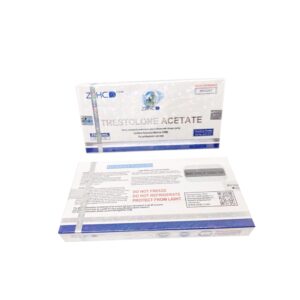
Trestolone Acetate ZPHC: Product Overview
Trestolone acetate, also known as MENT acetate, is a synthetic androgen and anabolic steroid compound. The FDA’s Substance Registration System identifies trestolone acetate as a chemical substance and lists it as an active form related to trestolone. Importantly, an FDA substance listing should not be interpreted as evidence that a specific product, formulation, or manufacturer has FDA approval.
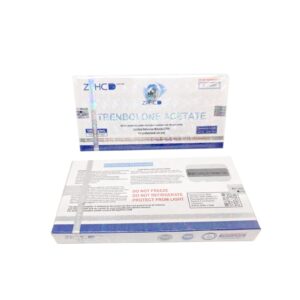
The product referenced here is described as Trestolone Acetate ZPHC — 25 mg/ml, supplied in 10 ampoules. The stated concentration and package configuration are product-description details and should be independently verified against the manufacturer’s labeling and applicable regulatory documentation.
What Is Trestolone Acetate?
Trestolone is an androgenic compound sometimes referred to as MENT. Trestolone acetate is an acetate ester associated with the active trestolone molecule. The FDA substance database identifies trestolone acetate as a prodrug relationship within its substance records.
Because compounds in this category can have significant hormonal effects, product information should be approached carefully. Terminology such as “anabolic,” “androgenic,” or “performance-enhancing” describes pharmacological characteristics and does not establish that a product is appropriate, safe, or legally marketed for a particular purpose.
ZPHC Product Specifications
Based on the product name supplied:
- Product: Trestolone Acetate
- Brand: ZPHC
- Stated concentration: 25 mg/ml
- Package: 10 ampoules
- Active compound: Trestolone acetate
- Category: Synthetic androgen/anabolic steroid
- Administration: The referenced presentation is an injectable ampoule; users should not infer an appropriate route or dosage without verified professional labeling.
The exact contents, sterility, concentration, excipients, manufacturing standards, and authenticity of any commercial product should be confirmed through authoritative documentation rather than relying solely on an online product listing.
Regulatory Considerations in the USA
One of the most important considerations for anyone researching trestolone acetate in the United States is the distinction between a substance record and an FDA-approved drug product.
The FDA explains that approved human drugs can be checked through Drugs@FDA, while the Orange Book identifies drug products approved based on safety and effectiveness under the applicable federal regulatory framework.
Therefore, the presence of “Trestolone Acetate” in an FDA chemical database should not be presented as proof that a particular ZPHC product is FDA-approved. The FDA itself notes that inclusion of a substance in its Substance Registration System does not imply regulatory review or approval.
This distinction is especially important for SEO content because phrases such as “FDA approved,” “safe,” “clinically proven,” or “approved for human use” should not be used unless they can be substantiated by appropriate regulatory documentation.
Potential Risks and Safety Considerations
Synthetic anabolic-androgenic steroids can affect multiple physiological systems. Risks associated with androgenic steroid exposure can include hormonal suppression, changes in lipid profiles, cardiovascular concerns, reproductive effects, and other adverse effects.
Injectable products introduce additional concerns related to sterility, contamination, improper administration, and product authenticity. A product that appears correctly labeled does not necessarily establish that its contents, concentration, or sterility have been independently verified.
For these reasons, potential users should discuss any androgenic or anabolic compound with a qualified healthcare professional before considering exposure. Medical supervision is particularly important when a substance has not been established as an approved treatment for the intended purpose.
Understanding the 25 mg/ml Label
The notation 25 mg/ml describes concentration: according to the supplied product description, each milliliter is represented as containing 25 milligrams of trestolone acetate.
However, concentration alone does not establish an appropriate dose, frequency, treatment schedule, or safety profile. Those decisions depend on factors including the intended medical indication, patient characteristics, formulation quality, pharmacology, and regulatory status.
Consequently, this product specification should be treated as descriptive information rather than dosing guidance.
10-Ampoule Packaging
The stated packaging consists of 10 ampoules. Packaging information can help distinguish product configurations when researching different listings, but packaging alone cannot establish authenticity or quality.
When researching a pharmaceutical or research chemical product, consumers should examine available manufacturer documentation, lot information, expiration information, storage instructions, labeling, and applicable regulatory information.
Why Responsible Product Research Matters
Online listings for hormonal and performance-enhancing compounds can contain claims that are difficult to independently verify. A compelling product page should therefore distinguish between documented facts and marketing statements.
For ZPHC trestolone acetate, useful research questions include:
- Is the specific product legally marketed for human use in the relevant jurisdiction?
- Is there verifiable regulatory approval for the intended use?
- Can the stated concentration be independently verified?
- Is there reliable information about manufacturing and quality control?
- Are the ampoules appropriately labeled and packaged?
- Is there documentation supporting identity and purity?
- What risks and contraindications have been identified for the active compound?
These questions provide a more reliable foundation for evaluating a product than promotional claims alone.
Trestolone Acetate and Consumer Awareness
Searches for ZPHC, trestolone acetate, MENT acetate, and related terminology may return a mixture of educational material, research information, commercial listings, and user-generated claims.
Consumers should distinguish these sources carefully. A manufacturer’s product page may describe its own product, whereas government databases provide regulatory or substance-identification information. These sources serve different purposes and should not be treated as interchangeable.
The FDA’s Substance Registration System confirms the identity of trestolone acetate as a recognized chemical substance, while the FDA’s approved-drug resources provide the appropriate framework for determining whether a particular drug product has been approved for human use.
Final Takeaway
Trestolone Acetate ZPHC — 25 mg/ml (10 ampoules) is a product description referring to a formulation containing trestolone acetate. Trestolone acetate is documented in the FDA’s chemical substance database, but that listing should not be confused with approval of a commercial ZPHC product.
For anyone researching this compound in the United States, the most important considerations are accurate identification, verified labeling, regulatory status, product quality, and awareness of potential health risks. Checking authoritative FDA resources and consulting a qualified healthcare professional can help distinguish documented information from unsupported marketing claims.
Be the first to review “Trestolone Acetate ZPHC — 25 mg/ml (10 ampoules)”
Related products
Injectable steroids
Injectable steroids
Injectable steroids
Testosterone Undecanoate ZPHC — 250 mg/ml (10 ampoules × 2 ml)
Injectable steroids
Injectable steroids
Injectable steroids
Injectable steroids
Injectable steroids
Reviews
There are no reviews yet.